Drop the Needle: Why America Fell Back in Love With Vinyl (And Shows No Signs of Stopping)
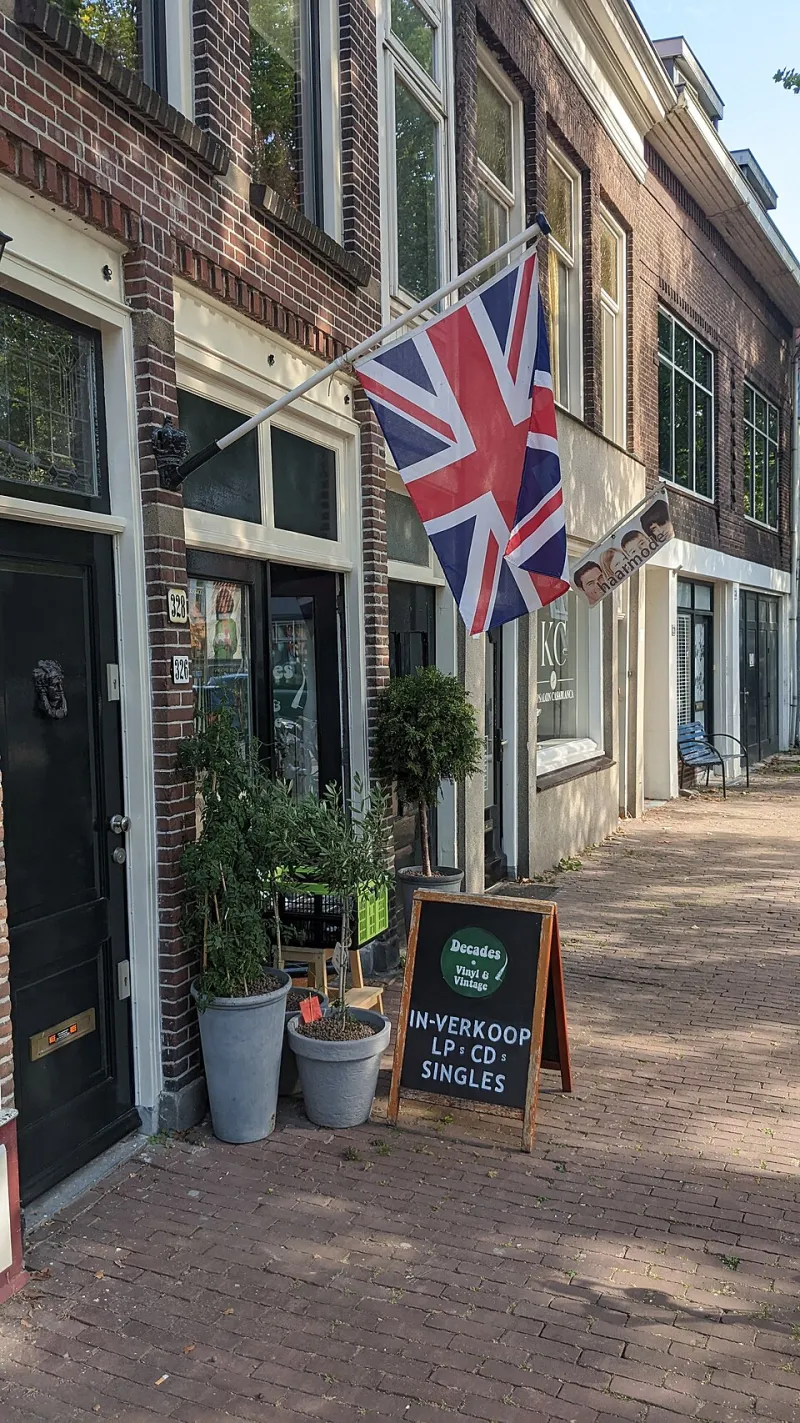
Photo: Donald Trung Quoc Don (Chữ Hán: 徵國單) - Wikimedia Commons - © CC BY-SA 4.0 International.(Want to use this image?)Original publication 📤: --Donald Trung 『徵國單』 (No Fake News 💬) (WikiProject Numismatics 💴) (Articles 📚) 20:28, 8 September 2022 (UTC), C
Walk into any independent record store on a Saturday morning and you'll notice something that would have seemed downright bizarre fifteen years ago: it's packed. Not with gray-haired baby boomers flipping through dollar bins (though they're there too, bless them), but with twenty-somethings in vintage flannels, couples on dates, and teenagers who weren't alive when CDs were considered cutting-edge. They're all here for the same reason — vinyl.
The numbers back up what your eyes are telling you. According to RIAA data, vinyl record sales have grown every single year since 2007, a streak that survived recessions, pandemics, and the complete transformation of how Americans consume music. In 2023, vinyl outsold CDs for the second year running — a milestone that would have seemed like science fiction back when Tower Records was shutting its doors. Something real is happening here, and at Go-Kat-Go, we wanted to understand it from the ground up.
The Store as Sanctuary
"People don't come in here just to buy music," says Marcus, who has owned a small independent record shop in Nashville for going on twelve years. "They come in here to be somewhere. To slow down."
He gestures at the rows of alphabetically organized crates, the handwritten staff picks cards, the turntable spinning a beat-up copy of Fleetwood Mac's Rumours behind the counter. "You can't browse Spotify the same way you browse a record store. There's no serendipity in an algorithm. Here, you pull something out because the cover catches your eye, and maybe it changes your whole afternoon."
That tactile, exploratory quality is something collectors mention over and over again. In an era where every song ever recorded is theoretically available at the tap of a finger, the deliberate ritual of vinyl — selecting a record, cleaning it, placing the needle, committing to a full side — feels almost countercultural. It's intentional listening in an age of passive consumption.
Does It Actually Sound Better? (The Audiophile Argument)
Ask ten vinyl enthusiasts whether records sound better than digital, and you'll get eleven opinions. But the audiophile case for analog is worth taking seriously.
Vinyl captures audio as a continuous waveform — an analog representation of the original sound. Digital audio, by contrast, samples that waveform thousands of times per second and reconstructs it. For most people, in most listening environments, the difference is negligible or nonexistent. But for listeners with high-quality equipment and well-trained ears, analog playback can produce a warmth and spatial dimension that even high-resolution digital files struggle to replicate.
"It's not that vinyl is objectively superior in every measurable way," explains Derek, a self-described obsessive who has spent the better part of two decades assembling a listening room in his Chicago apartment that most recording studios would envy. "It's that the format has a certain character. Especially with older pressings — you're hearing the music the way it was mastered to be heard. There's a directness to it."
Original pressings — records manufactured at the time of a song's initial release — are the holy grail for serious collectors. A first pressing of a classic rock album from the late 60s or early 70s, cut from the original master tapes, can sound dramatically different from a modern reissue. It can also cost dramatically more. Original pressings of sought-after titles regularly fetch hundreds, sometimes thousands of dollars on the secondary market.
But here's the thing: you don't need to spend a fortune to enjoy vinyl. A solid entry-level turntable, a decent receiver, and a pair of bookshelf speakers will run you a few hundred dollars total — and a well-curated collection of thrift store finds and budget reissues can sound genuinely wonderful.
The Millennial Connection: Inheriting the Obsession
For a huge chunk of today's vinyl buyers, the gateway drug was Mom or Dad's old record collection gathering dust in the basement. There's something deeply sentimental about dropping the needle on a copy of Rumours or Thriller that your parents actually owned — that has their fingerprints on it, literally and figuratively.
"I found my mom's records when I was in college," says Priya, a 31-year-old graphic designer in Portland. "She had this incredible collection of 70s soul and R&B — Al Green, Aretha, Marvin Gaye. I borrowed her old turntable, and that was it. I was gone. Now I probably have four hundred records of my own."
This inheritance narrative is common. Vinyl bridges generations in a way that streaming simply can't. It's a physical object that carries history — scratches, worn sleeves, handwritten notes in the liner. When a millennial picks up their parent's copy of Born to Run, they're not just listening to Springsteen. They're holding a piece of their family's story.
Record labels and retailers have been smart about capitalizing on this emotional connection. Reissues, anniversary pressings, and deluxe editions of classic albums fly off shelves every Record Store Day — the annual April celebration of independent record retail that has itself become a cultural institution since its launch in 2008.
Retro Fashion or Real Deal?
Skeptics — and there are some — argue that the vinyl revival is primarily aesthetic. That people are buying turntables and records the same way they buy film cameras or cast-iron skillets: because it looks cool and feels authentic, not because they're genuinely committed to the format.
There's probably some truth to that, and honestly, so what? If someone buys a copy of Purple Rain because it looks great on their apartment shelf, and then they actually listen to it and fall in love with Prince all over again, does the original motivation really matter? The music wins either way.
Marcus, back in his Nashville shop, is philosophical about it. "I've seen trends come and go. But the people who come in here — even the ones who started because it was trendy — a lot of them stick around. They get deeper into it. They start asking questions, hunting for specific pressings, learning about mastering engineers. The format teaches you to care about music in a different way."
Why Go-Kat-Go Readers Should Care
Here at Go-Kat-Go, we've always believed that the classics deserve more than nostalgia. They deserve engagement — active, passionate, curious engagement. And vinyl is one of the purest expressions of that idea.
Whether you're a longtime collector who remembers when records were just records (not a lifestyle statement), or a newcomer eyeing that entry-level turntable on Amazon, the vinyl world has room for you. Start at your local record store. Dig through the dollar bins. Let a cover catch your eye. Take something home and actually listen to it — not as background noise, but as the main event.
The needle drops. The groove catches. The music starts.
That's not nostalgia. That's a love affair that never really ended.
