Peace at the Turntable: How to Build a Playlist That Keeps Every Generation at the Table
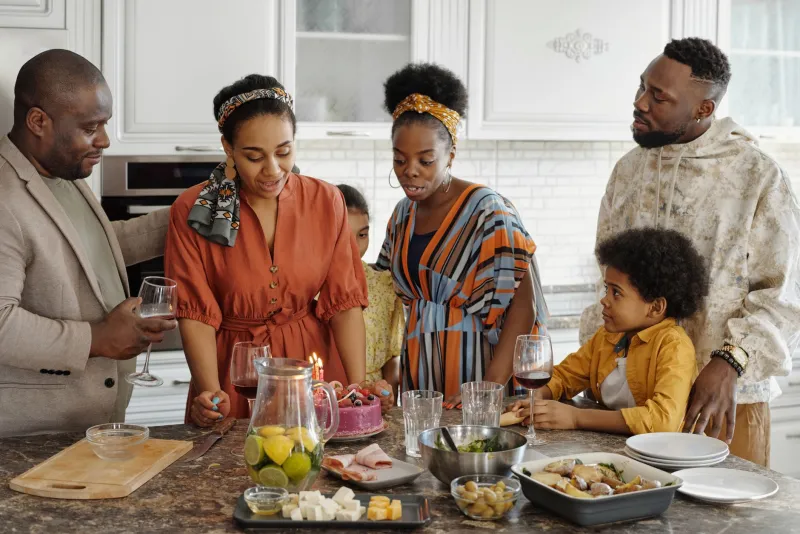
Let's be honest. You've been there. Someone's birthday dinner, a holiday gathering, maybe a backyard graduation party. You've got your dad who wants to hear Sinatra, your college-age niece who's on a current pop kick, your older sibling who will physically leave if the playlist goes more than fifteen minutes without something from the '90s, and a couple of middle schoolers who are deeply confused by anything that doesn't have a beat drop.
This is the cross-generational playlist problem, and it is genuinely one of the more underrated social challenges of our time. Get it right and the evening flows like a good bottle of wine. Get it wrong and you've got competing Bluetooth battles and someone passive-aggressively asking, "Who picked this?"
Fortunately, there's a method to this particular madness — and a lot of it comes down to understanding what music actually does at a gathering rather than just what people say they want to hear.
Stop Thinking About Genres, Start Thinking About Grooves
Here's the first mistake most hosts make: they organize their playlists by genre or era. "Okay, we'll start with some '60s stuff, move into the '70s, hit the '80s..." The problem is that this approach feels like a museum tour. It segments the crowd instead of connecting them.
The better approach? Think in terms of energy and feel. A slow, intimate groove is a slow, intimate groove whether it came out in 1965 or 2005. A room-filling funk banger works on a sixty-year-old and a twenty-year-old for the same biological reason — that bass line hits the same nervous system.
Start by mapping the arc of your evening. Early arrivals need something warm and conversational — not too loud, not too weird. Mid-party, when everyone's got a drink and the room is filling up, you can push the energy. Late in the night, when the food is cleared and the conversations are getting good, you want something that feels like the best kind of background without disappearing entirely.
Once you've got that arc, then start filling it with songs. The era becomes almost secondary.
The Bridge Songs: Your Secret Weapons
Every experienced party host has a mental list of what we'll call bridge songs — tracks that work across age groups without feeling like compromises. These are the songs that a sixty-year-old recognizes and loves while a twenty-two-year-old thinks is genuinely cool.
A few reliable classics that consistently clear this bar:
Earth, Wind & Fire's entire catalog. There is no demographic on earth that doesn't respond to "September" or "Shining Star." It's practically a scientific fact.
Fleetwood Mac's "Go Your Own Way" and "The Chain." Younger listeners have been rediscovering Fleetwood Mac for years — partly through streaming, partly through that one TikTok with the skateboard and the cranberry juice. These songs have new fans in their twenties right now.
Anything from the Motown golden era. The Four Tops, The Temptations, Marvin Gaye. These records have a melodic directness that transcends nostalgia. They just work on first listen, which is why they still work on the thousandth.
Classic film and TV soundtracks. The themes from Grease, Dirty Dancing, or even Saturday Night Fever carry built-in narrative — people don't just hear the music, they see the movie. That shared visual reference is a powerful connector across generations.
The Sequencing Secret Nobody Talks About
Sequencing is where most amateur playlists fall apart. You can have all the right songs and still kill the mood by ordering them wrong. The key principle is simple: never make a jarring jump.
If you're going from a 1970s soul ballad to something more uptempo, use a mid-tempo song as a bridge. If you're moving from classic rock to something more contemporary, find a song that shares sonic DNA — similar tempo, similar instrumentation, a key that doesn't feel like a slap in the face.
Think of it like conversation. A good dinner party doesn't jump from one topic to the next without any connective tissue. The music should feel like it's flowing, not shuffling.
One pro tip from seasoned DJs: always end a classic on a high. If you're playing an older song, make sure it's one of the great ones from that era — not a deep cut that only three people in the room will appreciate. Save the deep cuts for late in the evening when the real music nerds are still standing.
Reading the Room in Real Time
No playlist survives contact with an actual party completely intact. People's moods shift. The energy changes when the food comes out, or when someone puts a baby to sleep in the back room, or when the crowd suddenly thins to your five most enthusiastic guests.
Build flexibility into your approach. Have a few "emergency" songs queued up — tracks that you know, from experience, reliably shift energy in the direction you need. Something that always gets people talking, something that always gets people moving, and something that quietly winds things down when it's getting late.
Also: watch the room, not the playlist. If three people are dancing to something unexpected, don't cut it off because it wasn't part of the plan. The plan is to serve the room, not the other way around.
The Underlying Truth
Here's what all of this comes down to: the best cross-generational playlists aren't really about music at all. They're about making everyone in the room feel seen and included. When your dad hears something he loves, he relaxes. When your niece hears something that surprises her with how good it is, she leans in. When the kids start dancing because the groove got them before they could decide whether it was cool or not — that's the whole game right there.
Music is the easiest shortcut to connection that humans have ever invented. A good playlist just makes sure nobody gets left out of the conversation.
Now go make something worth turning up.