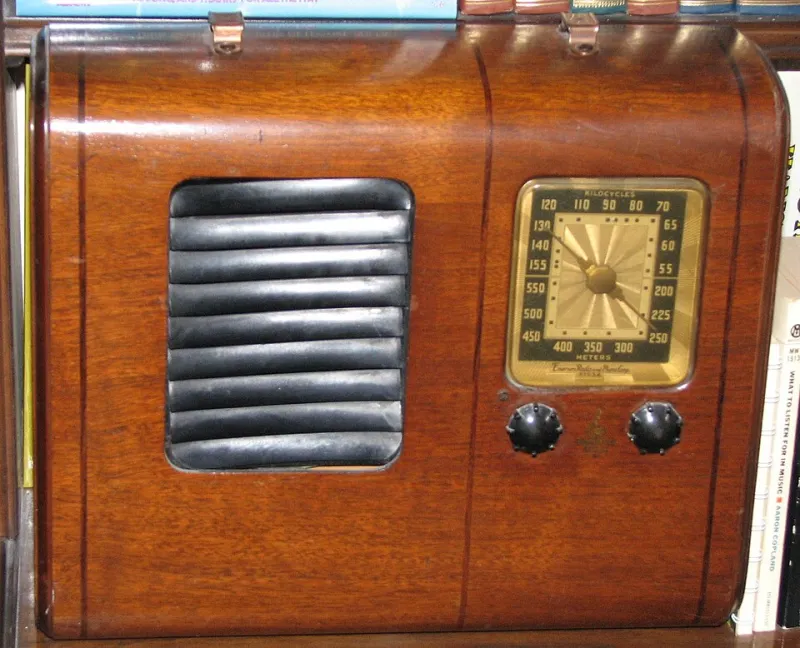
Wires, Warmth, and Why That Old Receiver in the Garage Still Runs Circles Around Your Wireless Speaker
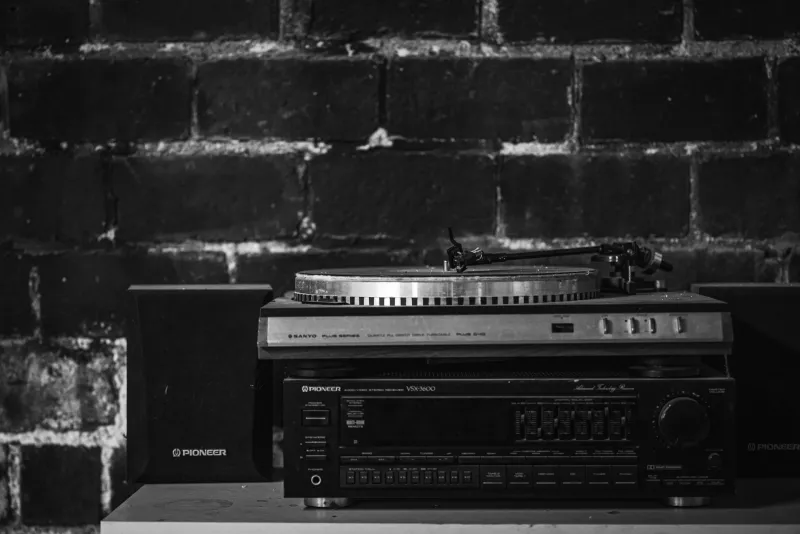
Somewhere in a garage, a basement, or the back corner of a spare bedroom, there's a piece of audio equipment that probably hasn't been touched in fifteen years. Maybe it's a Sansui receiver with a wooden faceplate and a row of satisfying toggle switches. Maybe it's a Pioneer integrated amp with a VU meter that bounces like it's got a pulse. Whatever it is, it's been sitting there quietly — and it's been waiting.
Because here's the thing nobody in the Bluetooth speaker aisle at Best Buy is going to tell you: that old gear sounds better. Not just sentimentally better. Not just "warm and fuzzy nostalgia" better. Technically, measurably, sit-down-and-shut-up better — at least for a whole category of listening experiences that matter to people who actually care about music.
Welcome to the great format war that never really ended.
The Science of Warm (And Why It's Not Just a Feeling)
Let's start with the basics, because this is where a lot of casual listeners check out — and they really shouldn't. Analog audio equipment from the 1970s and '80s was built around a fundamentally different philosophy than modern wireless tech. The goal wasn't convenience. The goal was fidelity.
When sound travels through a vintage amplifier and into a well-matched pair of speakers, it's moving through a continuous electrical signal. There's no compression happening. There's no digital-to-analog conversion introducing tiny errors. The waveform stays a waveform. That's the root of what audiophiles call "warmth" — it's not a metaphor. It's the audible result of a signal that hasn't been chopped up, encoded, transmitted wirelessly, and reassembled on the other end.
Bluetooth audio, even at its best, involves lossy compression. The most common codecs — SBC, AAC, and even aptX — discard audio data to make wireless transmission practical. Some of what gets thrown away is stuff most people won't consciously notice. But some of it is the texture, the air around instruments, the subtle decay of a piano note — exactly the stuff that makes a great recording feel alive.
Vintage gear doesn't do that. It just plays the music.
Impedance, Matching, and the Art of Building a System
Here's where it gets a little nerdy, but stick with us — it's worth it. One of the reasons old stereo equipment performs so well is that it was designed to work as a system. A receiver from 1977 was engineered to drive speakers with specific impedance characteristics, typically 8 ohms. When you pair that receiver with appropriately matched speakers, you get an efficiency and dynamic range that a self-contained Bluetooth speaker simply cannot replicate.
Modern portable speakers have to cram everything — amplifier, driver, battery, wireless receiver — into a single enclosure. Engineering compromises are inevitable. The driver is small. The cabinet is small. There's no separate amplifier stage optimized for power delivery. What you get is convenient and impressive for its size, but it's a fundamentally different product category than a properly assembled vintage stereo system.
Audiophiles have been saying this for decades, often to eye-rolls from the mainstream. But something interesting has been happening lately: Gen X listeners who grew up around their parents' hi-fi setups are circling back to that sound, and younger millennials who stumbled into vinyl are following the signal chain backward — from the turntable to the receiver to the speakers — and discovering that every link in that chain matters.
The Gear That Keeps Coming Back
Walk into any decent thrift store in America right now and there's a decent chance you'll find a receiver from a golden-era brand — Kenwood, Pioneer, Marantz, Harman Kardon, Fisher — sitting on a shelf for somewhere between twenty and eighty dollars. These units were built to last. Many of them, with a basic cleaning and maybe a capacitor recap, will outperform equipment that costs ten times as much at a retail electronics chain today.
That reality has not been lost on the collector community. Thrift store prices on vintage audio gear have been climbing steadily as word gets out. The Marantz 2270 receiver, once a garage sale fixture, now regularly sells for several hundred dollars in good condition. A pair of vintage JBL L100 speakers — which your uncle might have owned in 1974 — can fetch over a thousand dollars on the used market.
This isn't just nostalgia driving those prices. It's people who have listened to both options and made a choice.
What You Actually Lose (And What You Don't)
Let's be fair here, because Go-Kat-Go isn't in the business of pretending inconvenience doesn't exist. Vintage audio gear has real limitations. You need dedicated space. You need wires. You need to actually think about where your speakers go. You cannot take a Sansui G-7000 to the beach.
And yes, there's a learning curve. Matching a turntable cartridge to a phono preamp isn't the same as pressing play on a phone. If your vintage receiver has a channel imbalance or a scratchy volume pot, you're going to need to either learn to fix it or find someone who can.
But here's what you don't lose: the music itself. A well-set-up vintage system playing a quality recording — vinyl, high-res digital through a proper DAC, even a well-mastered CD — delivers an experience that's genuinely hard to replicate through a palm-sized wireless speaker. There's a sense of space, of physical presence, of instruments occupying actual positions in the room, that Bluetooth audio struggles to reproduce convincingly.
The Listening Room as a Statement
There's also something cultural happening here that's worth naming. Building a vintage stereo system is, in a quiet way, a statement about how you want to engage with music. It says that listening is an activity, not just background noise. It says that the album matters as a complete work, not just a collection of streamable tracks. It says you're willing to sit down, shut off the phone, and actually hear something.
That's a countercultural act in 2024. And honestly? It sounds exactly like the kind of thing the Go-Kat-Go community has been about all along.
So if you've got a relative's old receiver gathering dust, or you've been tempted by that Technics receiver at the flea market every weekend for the past month — go ahead and pull the trigger. Get it cleaned up. Find a decent pair of vintage speakers. Run some cables.
Then put on a record, sit back, and let the needle drop.
You'll hear what all the fuss is about.