Name That Ghost: How a Little App Became the Ultimate Time Machine for Songs You Almost Forgot
There's a particular kind of madness that only music lovers understand. It's not the good kind of madness — not the euphoric, dancing-in-your-kitchen kind. This is the slow, low-grade torment of a song you can't name. You've got maybe eight notes of a melody lodged somewhere between your ears. You remember it was playing when your mom drove you home from soccer practice. Or maybe it was the background music in a department store. Or the B-side of something you heard at a friend's house before you had to leave. And for thirty-something years, that nameless ghost of a song has been haunting you.
For a long time, you just lived with it. You hummed it at people and watched their eyes go blank. You called radio stations and described it in embarrassing detail. You posted on forums with subject lines like "80s song, female singer, kind of sad, maybe synthesizers?" and got seventeen wrong answers and one person who just said "Toto."
Then Shazam showed up and changed the whole game.
From Frustration to Five Seconds Flat
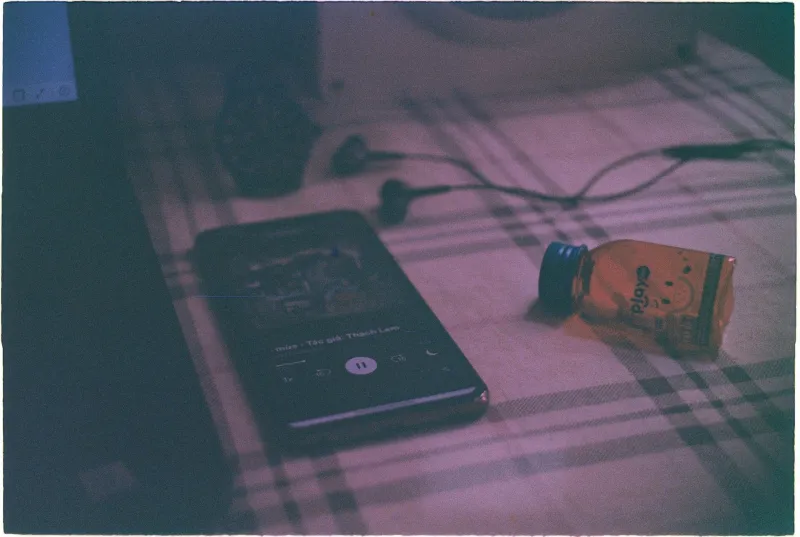
Shazam launched in the US back in 2002, but it took years — and the rise of the smartphone — before it became the reflexive, automatic thing it is today. Now it's baked right into iPhones. You don't even have to open an app. You just hold your phone up to the music and wait. Five seconds. Maybe ten if the room is loud. And then, like a detective snapping a file folder shut, it gives you the name.
For people chasing ghosts from the '70s, '80s, and '90s, that moment can feel genuinely emotional. Not dramatic-movie-emotional, but the quiet, private kind — the kind where you exhale and sit back and think, so that's what you were called all along.
Susan M., a 54-year-old teacher from Columbus, Ohio, spent the better part of two decades trying to identify a song she heard on the radio during a road trip in 1989. "It was this dreamy, slow-burn thing with a guitar line I could never quite reproduce," she says. "I'd hum it for people, I'd try to describe it, nothing ever worked." A few years ago, she was watching a documentary when the song drifted through a background scene. She grabbed her phone. Shazam nailed it in under ten seconds. "I actually teared up a little," she admits. "Which is ridiculous. But also not."
The Psychology of the Stuck Song
Music psychologists call it an "earworm" — an involuntary musical imagery that lodges itself in your brain and replays on a loop. But the specific variety that haunts nostalgic listeners is something a little different. It's not just a catchy hook cycling on repeat. It's a song tied to an emotional memory, a specific moment in time, and the frustration of not being able to fully access that memory because one crucial piece — the song's identity — is missing.
Dr. Elizabeth Margulis, a music cognition researcher whose work has explored how music and memory intertwine, has written about the way music functions as a kind of emotional timestamp. When you can't name the song, you can't fully unlock the memory. The melody is there, the feeling is there, but the key that opens the whole room is just out of reach. Identifying the song, then, isn't just trivia-satisfaction. It's a small act of emotional archaeology.
Shazam, whether it intended to or not, became an archaeology tool.
The Limits of the Tap
Of course, Shazam isn't magic. It works by listening for audio that's actually playing — which means if the song only exists inside your head, you're still on your own. That's where the next generation of music-ID technology comes in. Google's "Hum to Search" feature, which rolled out in 2020, lets you hum or whistle a melody and attempts to match it to a real song. It's imperfect — sometimes hilariously so — but it's solved genuine mysteries for people who had nothing but a tune and a prayer.
There are also communities built specifically around this kind of musical detective work. The subreddit r/NameThatSong has hundreds of thousands of members who post descriptions, voice memos of themselves humming, and half-remembered lyric fragments. The collective brain of that community has identified songs from thirty-second snippets, from descriptions as vague as "it was kind of like the Bangles but slower," and from clips of people literally singing into their phones off-key. It's messy and crowdsourced and wonderful.
What We Traded Away
Here's the thing, though — and this is the part that sits a little uneasy if you grew up in the analog era. There was something about the hunt that mattered. Calling into a radio station. Asking the DJ. Flipping through the bins at a record store and describing the song to someone behind the counter who just knew. Those interactions built connections. They were conversations. The record store clerk who finally identified your mystery song after you hummed it three times became a small hero in your personal mythology.
Now the answer arrives in five seconds and you move on. The mystery dissolves before it even has a chance to become a story.
That's not a criticism of the technology. It's just an honest accounting of what instant gratification costs. Every shortcut has a toll.
The Collector's Angle
For serious music collectors, Shazam and its cousins have opened up a different kind of rabbit hole. Identify the song, sure — but then what? For a lot of people in the Go-Kat-Go community, "what" means tracking down the original pressing, finding the 45, or hunting for the LP on which it appeared. The identification is the starting gun, not the finish line.
Vinyl hunters in particular have talked about how music-ID apps have accelerated their collections in ways they didn't expect. A song heard in a coffee shop, a snippet from a TV show, a track sampled in something newer — all of it becomes fair game now. The crate-digging instinct didn't go away. It just has a faster on-ramp.
The Ghost Finally Has a Name
At the end of the day, what Shazam and its successors have really done is democratize a very specific kind of joy. You used to need connections, luck, or an encyclopedic memory to solve a musical mystery. Now you just need a few seconds of audio and a decent signal.
That's not a small thing. For the millions of people walking around with unresolved musical ghosts from their past, it's actually kind of enormous. The songs of the '70s, '80s, and '90s deserve to be named, heard, and remembered properly — not half-recalled and half-invented by a brain doing its best with incomplete information.
So the next time a melody floats up from somewhere deep in your memory, hold your phone to the air. Or hum it into Google. Or post it to a forum at midnight and wait for a stranger to save you.
The classics never stopped spinning. Sometimes you just need a little help finding them again.