Between the Bass Line and the Block: How Soul and R&B Became the Heartbeat of Urban America
There's a sound you know even if you've never been able to name it. It floats out of a half-open door on a warm afternoon. It competes with traffic and wins. It's Al Green turned up just enough on a transistor radio behind the register, or a Curtis Mayfield record crackling through speakers that have seen better days. It smells like hair grease and Pine-Sol and whatever's on the grill two doors down. That sound — that specific, irreplaceable sound — is the unofficial soundtrack of American neighborhood life, and it's been spinning since before most of us were born.
We spend a lot of time at Go-Kat-Go talking about music as something you collect, something you listen to. But there's another dimension to classic soul and R&B that doesn't get enough airtime: the way it lived outside the home, outside the concert hall, right there on the block. In the spaces between. In the places where community actually happened.
The Corner Store Was Always the First Stage
If you grew up in any American city with a real neighborhood culture — Baltimore, Chicago, Philly, Newark, Memphis, you name it — you know the corner store wasn't just a place to grab a loosie or a pack of Now and Laters. It was a gathering spot. A social hub. And the music playing behind the counter wasn't chosen randomly.
Owners had opinions. Strong ones. The guy running the bodega on your block might have been a Marvin Gaye loyalist who wouldn't entertain any argument about What's Going On being the greatest album ever pressed. The woman at the beauty supply two blocks over kept a stack of Aretha Franklin 45s next to the register like they were scripture. The music wasn't background noise — it was a statement of identity, a declaration of taste, a cultural flag planted right there between the bread rack and the lottery machine.
Those choices shaped generations of listeners. Kids who couldn't have told you what a Billboard chart was grew up knowing every word to "Ain't No Mountain High Enough" because it played every single afternoon in the place where their moms sent them to get milk.
Barbershops and Beauty Salons: The Original Listening Rooms
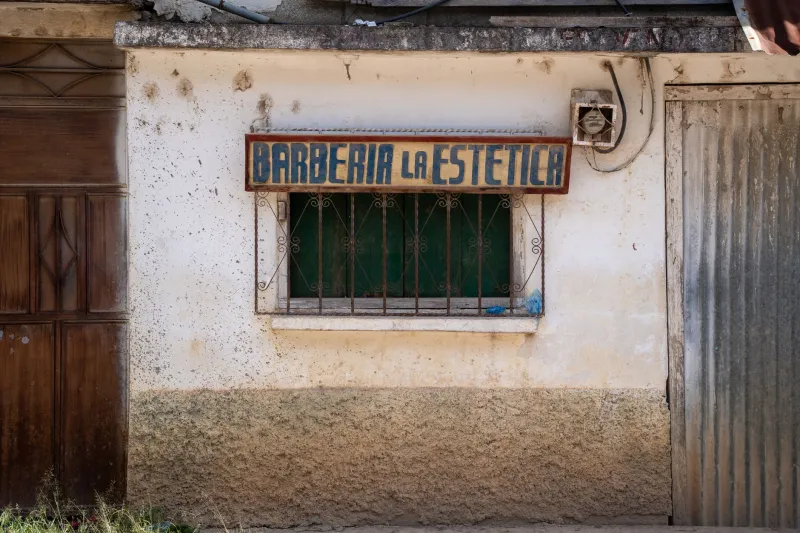
If the corner store was the first stage, the barbershop was the concert hall. And not just because of the music — because of the conversation the music generated.
Black barbershops in America have always functioned as community archives. Politics, sports, philosophy, gossip — all of it filtered through a space where somebody was always getting a fade and James Brown was probably playing at least once an hour. The music wasn't incidental to that culture. It was load-bearing.
Soul and R&B tracks carried emotional weight that made them perfect for those spaces. A song like "A Change Is Gonna Come" by Sam Cooke didn't just fill silence — it opened doors. It gave people language for things that were hard to say out loud. Otis Redding's "Respect" (yes, before Aretha made it immortal) was a conversation starter. Stevie Wonder's Songs in the Key of Life was practically a civic document.
The barber with the best playlist was the barber with the longest wait list. That's not a coincidence.
Street Corners, Boom Boxes, and the Handoff to Hip-Hop
By the late 1970s, something new was happening on those same corners. The soul and funk records that had been playing in shops and on radios were getting chopped up, looped, and rebuilt into something the world had never heard before. Hip-hop didn't arrive from nowhere — it arrived from the crates.
DJ Kool Herc isolating the break in a James Brown record at a Bronx block party in 1973 is one of the most-told origin stories in music history, and it's told that often because it matters that much. The entire architecture of hip-hop — the samples, the breaks, the call-and-response between MC and crowd — was built on the foundation of classic soul and R&B. Those songs didn't just influence what came next. They became what came next.
When you hear a Grandmaster Flash record from 1982, you're also hearing Chic. You're hearing Sly Stone. You're hearing the Isley Brothers. The street corner didn't replace the soul record — it remixed it.
And that boom box culture? The guys carrying those massive machines through the neighborhood in the early 80s weren't just showing off hardware (though they absolutely were doing that too). They were continuing a tradition of music as public declaration. Of sound as shared space. Of the block as a living, breathing venue.
Songs That Belonged to Everybody
One of the things that made this music so durable in community spaces was its democratic quality. You didn't need to buy the record. You didn't need a hi-fi setup or a quiet room with good acoustics. You just needed to be within earshot of someone who had it, and in a dense urban neighborhood, that was basically always.
There's something genuinely beautiful about that. A song like "Lean on Me" by Bill Withers or "Just the Two of Us" or "I'll Take You There" by the Staple Singers — these tracks achieved a kind of communal ownership that the music industry never fully planned for and probably couldn't have manufactured on purpose. They became ours in a way that went beyond fandom.
That's the thing about music that lives on the street instead of on a shelf. It doesn't belong to the collector. It doesn't belong to the critic. It belongs to whoever's standing on the corner when it comes on.
Why It Still Matters — and Still Plays
Here's what's wild: none of this is past tense. Walk into the right barbershop in Atlanta or Houston or Detroit right now and you'll hear the same Al Green record that was playing in 1974. The corner store tradition has shifted and evolved — some of those spaces now blast reggaeton or trap — but in plenty of neighborhoods, the classic soul and R&B station is still the default setting.
And younger generations aren't indifferent to it. If anything, there's a hunger for that music and the culture around it. People want to know where the samples came from. They want to understand why their grandparents' faces change when certain songs come on. They're digging into Motown catalogs and Stax records and Philadelphia International releases the way previous generations dug into crates at the flea market.
The songs that played in your neighborhood growing up aren't just nostalgia. They're documentation. They're proof that music can do more than entertain — it can hold a place together.
And on the right afternoon, with the right song drifting out of the right doorway, you can feel exactly what that means.