Windows Down, Volume Up: The Classic Albums That Were Born to Ride Shotgun
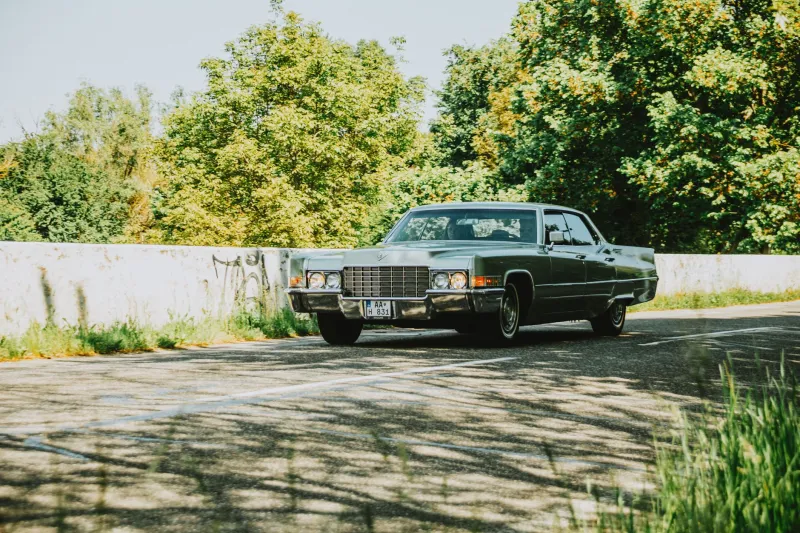
There's a moment every driver knows. You're merging onto the highway, the last traffic light is shrinking in the rearview, and whatever's playing through the speakers suddenly stops being background noise and becomes something else entirely. It becomes the movie. It becomes the feeling. And nine times out of ten, that feeling has a very specific album attached to it — one you probably heard for the first time in somebody's backseat, with the windows down and nowhere particular to be.
Certain records just belong on the road. Not in a playlist-filler kind of way. In a bone-deep, hardwired, pull-over-and-turn-it-up kind of way. The question worth asking — and one music fans have been chewing on for decades — is why. Why does Born to Run feel like it was mastered specifically for the stretch of I-95 between exits? Why does cracking open Hotel California on a long drive feel less like choosing a record and more like completing a ritual?
The Car as a Listening Room Like No Other
Let's start with the physics of it. A car is, acoustically speaking, a weird little miracle. The interior creates a kind of forced intimacy — you're close to the speakers, the road noise adds a low-frequency hum that actually complements certain bass lines, and there's nowhere else to be. No dishes to do. No notifications. Just you, the road, and whatever's playing.
Music psychologists have pointed out for years that context shapes perception in powerful ways. The same song heard in a grocery store versus a dark car at midnight might as well be two different compositions. In a moving vehicle, the brain is already in a heightened state — alert, forward-focused, slightly euphoric from the dopamine hit of motion and freedom. Pair that neurological cocktail with the right album, and you've got a memory that'll stick for life.
First-time listeners are especially vulnerable. Hit an album at the right moment — sixteen years old, new license in your wallet, somebody's older brother's tape deck cranking — and that record gets soldered to the experience permanently. You're not just hearing it. You're living inside it.
The Records That Claimed the Highway
Not every great album makes a great road album. Some records are too interior, too still, too much about sitting with yourself in a quiet room. But a select few seem engineered for forward motion.
Bruce Springsteen's Born to Run is probably the most obvious example, and it earned that status honestly. Every track on that 1975 record is built around escape — the roar of engines, the pull of the open road, the desperate romance of getting out. The production is enormous, wall-of-sound huge, and it fills a car interior the way a stadium fills with noise. It doesn't just play well at highway speed. It practically demands it.
The Eagles' Hotel California works differently but just as effectively. There's a slow-burn tension to that album, a golden-hour melancholy that maps perfectly onto long drives through unfamiliar landscapes. The title track's famous guitar outro sounds like asphalt unspooling under tires. It's cinematic in the truest sense — wide-frame, unhurried, built for distance.
Prince's Purple Rain might be the wildcard on the list, but ask anyone who came of age in the mid-eighties and they'll tell you: that album is a highway record. The title track alone has a swell and release that mirrors the rhythm of a long drive. It builds, it breathes, it lets you exist inside it. And the more uptempo cuts — Let's Go Crazy, Baby I'm a Star — hit like a shot of adrenaline when the miles start to blur.
Other contenders depending on who you ask: Tom Petty's Full Moon Fever, Fleetwood Mac's Rumours, Bob Seger's Night Moves, and basically the entire output of ZZ Top between 1983 and 1985. Regional loyalty plays a role too — a Southern rock fan in Georgia might swear by the Allman Brothers in ways that puzzle someone raised on California pop.
Why Some Albums Stick and Others Don't
There's a structural argument to be made here. Road albums tend to share certain sonic qualities: strong rhythmic momentum, dynamic range that rewards a decent sound system, and lyrics that traffic in motion, longing, or freedom. They also tend to have a sense of arc — a beginning, middle, and end that mirrors the experience of a journey.
But the stickiest road albums do something beyond the purely musical. They capture a specific cultural moment so precisely that they become inseparable from it. Born to Run isn't just a record about driving — it's a record about a particular kind of American restlessness, a working-class hunger for something bigger. Hotel California is about the seductive decay of the California dream. These albums carry weight beyond their runtime, and when you play them in a moving car, you're not just listening. You're participating in a mythology.
There's also the communal element. Road albums get passed down. An older sibling plays something on a family road trip and the younger kids absorb it without even trying. A college roommate burns a CD for a cross-country drive. A dad puts on something from his own teenage years and the kids groan — until, fifteen minutes later, they're quietly singing along. The car has always been one of the most reliable transmission vectors for musical taste.
The Tape Deck, the Burned CD, and the Aux Cable
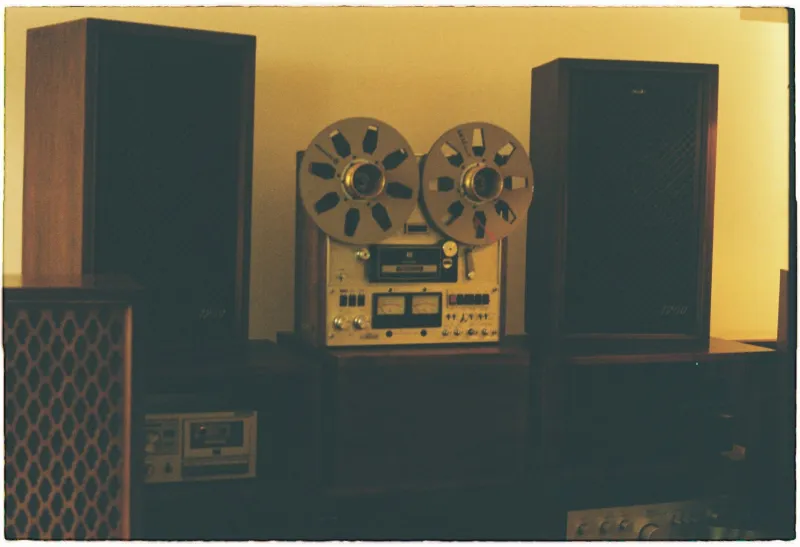
Every era of automotive listening has had its own texture. The eight-track player, boxy and loyal. The cassette deck, which rewarded patience and punished impatience (nobody misses rewinding with a pencil). The CD changer in the trunk, stocked for a week-long trip. The burned mix disc, which was its own art form. And then the aux cable, which democratized everything and broke the album format in ways we're still reckoning with.
For collectors and purists, there's something worth mourning in the shift away from albums as a unit. A great road record works because of its sequencing — the way track three sets up track four, the way the album breathes in and out. Shuffle mode doesn't know that. A playlist doesn't care. The album, played front to back, is a different and arguably superior experience. And the car, with its enforced continuity and its forward momentum, is one of the last places people still listen that way.
Still Rolling
Here's the thing about car albums: they don't age the way other records do. Pull up Born to Run on a Tuesday afternoon commute in 2025 and it still sounds like escape. It still sounds like youth and speed and the particular American belief that somewhere down the road, things get better. That's not nostalgia exactly — or it's not just nostalgia. It's the music doing what it was built to do.
Some songs are made for rooms. Some are made for headphones. And some — the lucky, loud, perfectly constructed ones — were made for the open road, with somebody's hand out the window catching the air, and the next exit still miles away.
Those are the ones we keep.